API Versioning Strategies That Don't Break Your Consumers
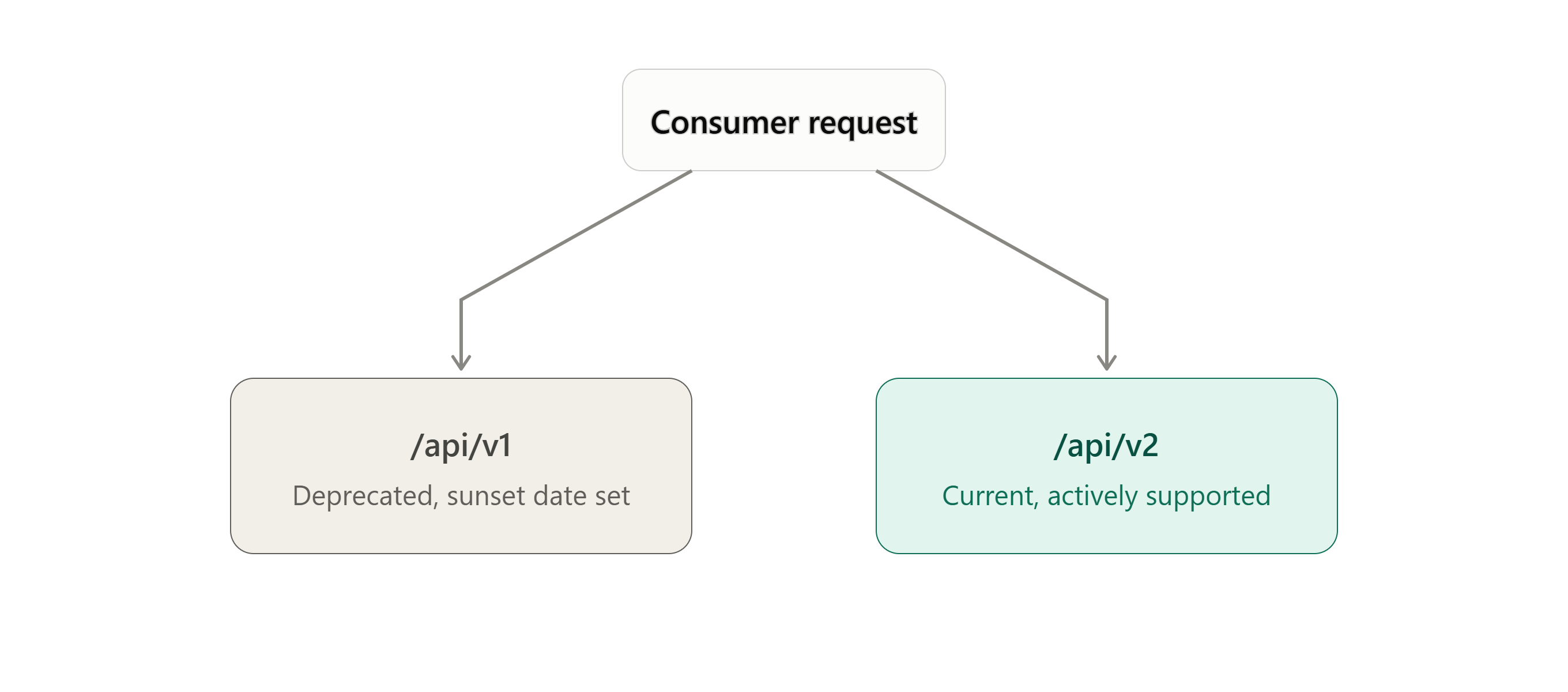
The first time I had to make a breaking change to a live API with real, external consumers, I learned a lesson the hard way: it doesn't matter how good your new design is if it takes down someone else's production system without warning. Versioning isn't a nice-to-have feature you add when you get around to it. It's a promise you make to every consumer the moment your API goes live, whether you've thought about it explicitly or not.
The promise you're actually making
Every API response shape, every field, every status code behavior becomes a contract the instant someone builds against it. Change it without warning and you've broken that contract, regardless of how justified the change was on your end. Versioning is how you change your mind without breaking that promise.
URL versioning: the one I default to
csharp
app.MapGroup("/api/v1/policies").MapPolicyEndpointsV1();
app.MapGroup("/api/v2/policies").MapPolicyEndpointsV2();
Header-based versioning is arguably more "correct" from a REST purist's standpoint, keeping the URL stable while the version travels in an Accept header. In practice, on systems where third parties integrate against you, URL versioning wins because it's impossible to get wrong by accident. A consumer can see the version in the URL, log it, debug against it, and never wonder if they forgot to set a header correctly.
Additive changes don't need a new version at all
Not every change is breaking. Adding a new optional field to a response, adding a new endpoint, adding a new optional query parameter, none of these break an existing consumer who ignores fields they don't recognize. I reserve new versions specifically for breaking changes: removing a field, changing a field's type, changing required behavior. Bumping a version for every minor addition trains consumers to distrust your versioning scheme entirely, because now they can't tell which version bumps actually matter.
Deprecation needs a timeline, not just a warning
csharp
app.MapGroup("/api/v1/policies")
   .MapPolicyEndpointsV1()
   .WithMetadata(new ApiDeprecatedAttribute(sunset: "2026-12-01"));
Announcing a version is deprecated without a concrete sunset date is close to meaningless. Consumers deprioritize open-ended warnings behind whatever's actually on fire this week. A specific date, communicated well in advance and included in response headers, gives them something to actually plan around.
Sunset: Tue, 01 Dec 2026 00:00:00 GMT
Deprecation: true
Link: <https://api.example.com/docs/migration-v1-v2>; rel="deprecation"
Running two versions in parallel is real operational cost
This is the part that gets underestimated. Maintaining v1 and v2 side by side means double the test surface, double the documentation, and double the places a bug can hide. I don't take on that cost casually. Before shipping a breaking change, I ask whether it's genuinely necessary or whether it could be delivered as an additive change instead. Most of the time, with enough thought, it can.
Internal APIs get a different calculus
For APIs with a small number of known internal consumers, I've sometimes skipped formal versioning entirely in favor of coordinated deployments, where the API and its consumers ship together and breaking changes are a conversation, not a migration. That only works when you actually control both sides. The moment an API has consumers outside your direct coordination, formal versioning stops being optional.
The real discipline
Versioning done well is invisible to consumers, they simply never get surprised. Versioning done poorly announces itself loudly, usually through a support ticket at 2am from someone whose integration just broke. The difference isn't the versioning scheme you pick. It's whether you treat every public-facing change as a promise you're responsible for keeping.