What's Actually New in .NET Right Now: A Practical Look at .NET 10 and .NET 11
Every major .NET release comes with a wave of "everything just changed" content, and most of it is noise dressed up as urgency. I went through what actually shipped in .NET 10 and what's landing in .NET 11, and filtered it down to what genuinely changes how you build and ship, versus what's a nice bullet point in a keynote slide.
.NET 10: what's actually running in production right now
.NET 10 became the current LTS release in November 2025, which means it's the version most teams building anything serious should already be on or actively moving toward. A few things in it are worth real attention.
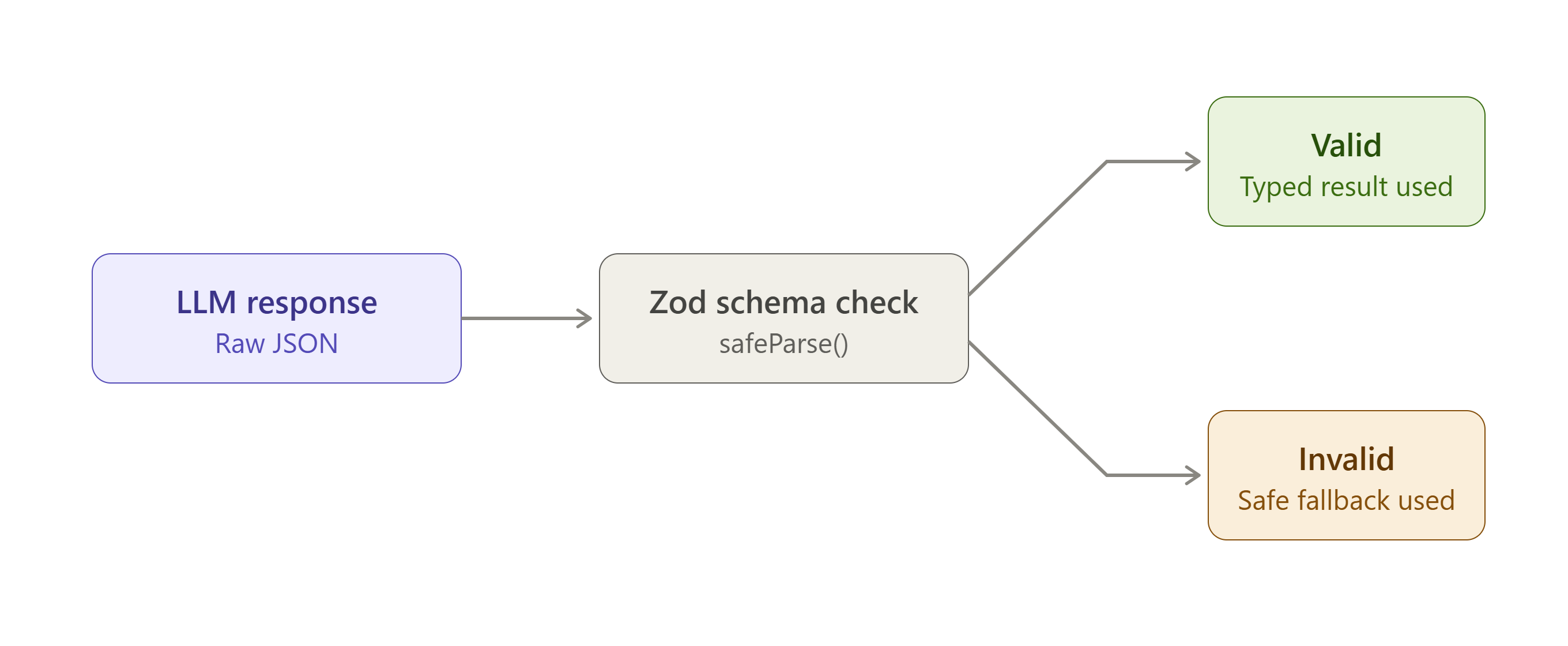
AI is no longer bolted on, it's part of the platform. The Microsoft Agent Framework shipped as a first-class part of .NET 10, giving applications built-in AI integration instead of the patchwork of third-party SDKs most teams have been stitching together. On a platform where I've previously wired LLM calls into services by hand, validating everything myself with Zod-equivalent patterns on the .NET side, having this as a supported, built-in layer changes the starting point for anyone building AI-assisted features going forward.
Field-backed properties in C# 14 solve a genuinely annoying gap that's existed for years: the awkward jump from an auto-implemented property to one with custom logic in its getter or setter, which used to force you to introduce a whole backing field and rewrite the property from scratch. The new field contextual keyword lets you access the compiler-generated backing field directly, so you can add validation or logic to a property without restructuring it.
csharp
public string Email
{
    get => field;
    set => field = value?.Trim().ToLowerInvariant() ?? throw new ArgumentNullException();
}
Small, but the kind of small that shows up in real code constantly.
Vector search landed natively in EF Core 10, paired with SQL Server 2025's native vector data type. For anyone building retrieval-augmented AI features, semantic search over documents, similarity matching, this used to mean reaching for a separate vector database or a workaround. Now it's a LINQ query away, with VECTOR_DISTANCE() translated properly by the provider.
Post-quantum cryptography support expanded significantly, including Windows CNG support for ML-DSA and ML-KEM algorithms. This one won't matter to most teams today, but for anyone in fintech or anywhere handling long-lived sensitive data, the migration window for post-quantum readiness is exactly the kind of thing you want to start planning years before it's mandatory, not scrambling for after the fact.
.NET 11: what's coming and why Runtime Async is the real headline
.NET 11 is in Release Candidate as I write this, shipping as a Standard-Term Support release in November 2026. STS releases get less attention than LTS ones, but this one has a change worth planning around now.
Runtime Async is graduating out of preview, and this is the one I'd actually pay attention to. Async/await has always compiled down to a state machine generated by the compiler, which works, but adds real overhead and produces the notoriously unhelpful stack traces every .NET developer has learned to squint at during a production incident. Runtime-native async means the runtime itself understands async execution, producing cleaner stack traces and measurably lower overhead, without needing the EnablePreviewFeatures flag once you're targeting net11.0. If you've ever lost twenty minutes staring at a stack trace three async frames deep trying to figure out where an exception actually originated, this is the fix.
C# 15 introduces built-in union types and closed hierarchies, which is genuinely significant for anyone who's been hand-rolling discriminated-union patterns with sealed base classes and pattern matching to get type-safe "one of these states" modeling. Native union support means the compiler can enforce exhaustiveness directly, closing a gap C# has had relative to languages like TypeScript or F# for a long time.
ASP.NET Core 11 ships automatic CSRF protection and async validation by default. Security defaults that used to require explicit setup becoming the default posture is exactly the direction I want to see a framework moving, because the safest configuration is the one nobody has to remember to turn on.
Zstandard compression, enabled by default, and Kestrel processing HTTP/3 requests without waiting for the control stream, cutting first-request latency on new connections, are both the kind of unglamorous performance work that never makes a keynote highlight reel but shows up directly in real response time numbers under load.
What this means practically
If you're running production .NET systems right now, .NET 10 is where you should already be, or actively planning your migration to, given its LTS status and three-year support window through November 2028. .NET 11 is worth tracking closely specifically for Runtime Async, because debugging async code is about to get meaningfully easier, and for the built-in union types, because that closes a real gap in how expressively you can model state in C#.
None of this is hype-cycle noise. The AI integration, the security defaults becoming automatic, the async runtime finally being native rather than compiler-simulated, these are the platform actually maturing in the directions that matter for the systems most of us are building today: AI-integrated, security-conscious, and under real production load.